From Porridge to Practice: The Goldilocks Experience
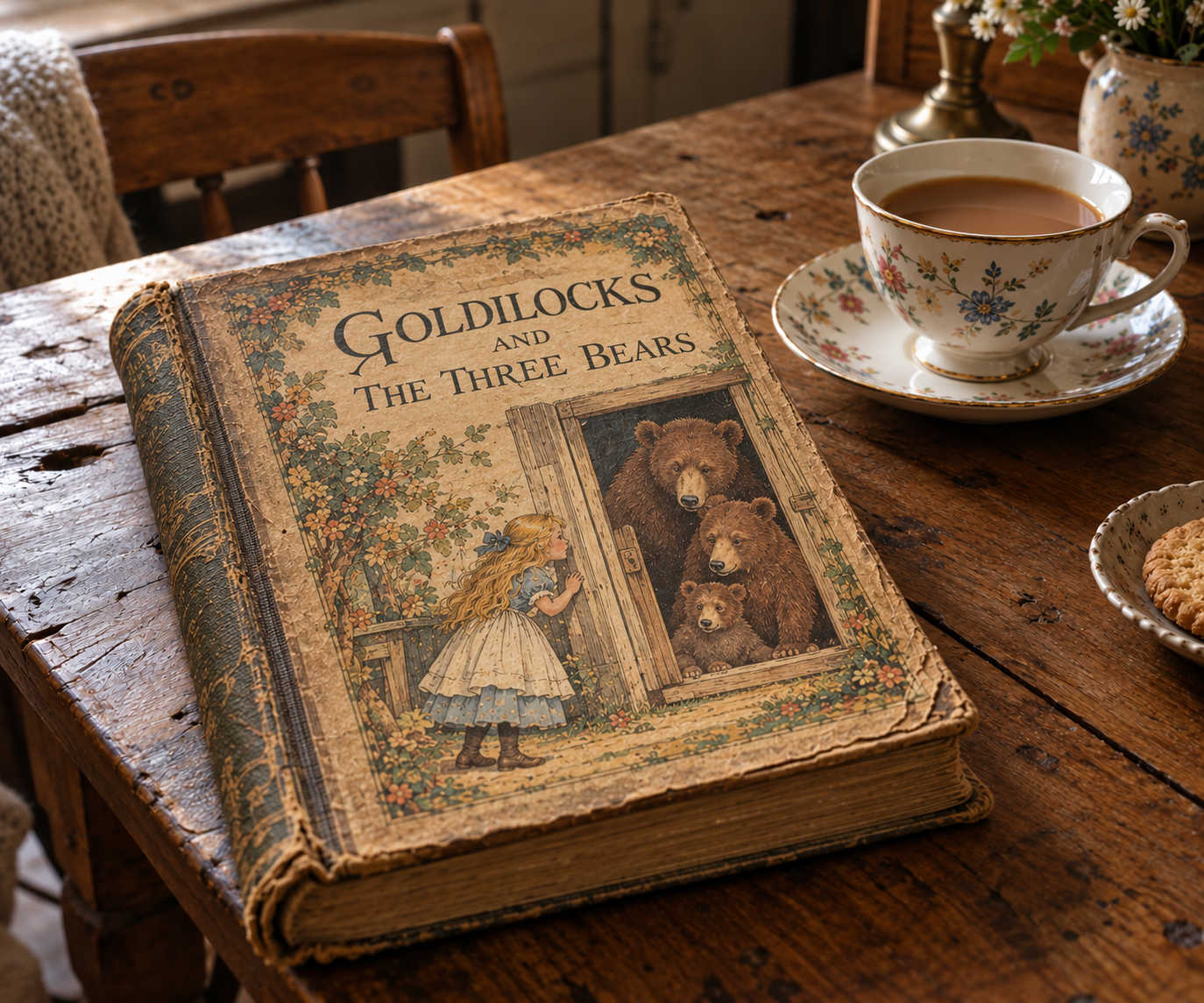

From Porridge to Practice
The Goldilocks Experience
You probably know the story of Goldilocks and the Three Bears.
A little girl wanders into a house in the woods, discovers three bowls of porridge, three chairs and three beds, and sets about finding which ones suit her best.
Too hot. Too cold. Too hard. Too soft.
And then, eventually...
Ah, just right!
It's a story many of us have known since childhood. We may even have read it to our own children without giving it much thought. Yet sometimes the most familiar stories have a way of revealing something new when we encounter them again.
Interestingly, earlier versions of Goldilocks were less concerned with finding the perfect balance and more concerned with entering somebody else's home, helping yourself to their belongings and facing the consequences. In fact, Goldilocks herself wasn't even part of the earliest published version. The visitor was an old woman, who was later replaced by the little girl we know today.
Stories change as they're told and retold. But something else happens too. We change.
Something we heard as a child may take on an entirely different meaning when we encounter it later in life. Not necessarily because we've finally discovered what the storyteller intended, but because our own experiences allow us to see something we hadn't noticed before.
And that's what happened when I began looking at Goldilocks through the lens of Qigong, Unholding and Life as Practice.
I began to wonder whether Goldilocks was doing something remarkably familiar.
She was searching for an experience that felt just right.
And aren't we all, in one way or another?
We look for the right amount of activity, the right amount of rest, the right balance between effort and ease. We adjust our circumstances, our expectations and sometimes even ourselves, hoping to find that comfortable place where everything feels as it should.
And occasionally, we find it.
Ah, just right.
But what happens when life doesn't remain that way?
A bowl of porridge
Let's return to Goldilocks and her breakfast.
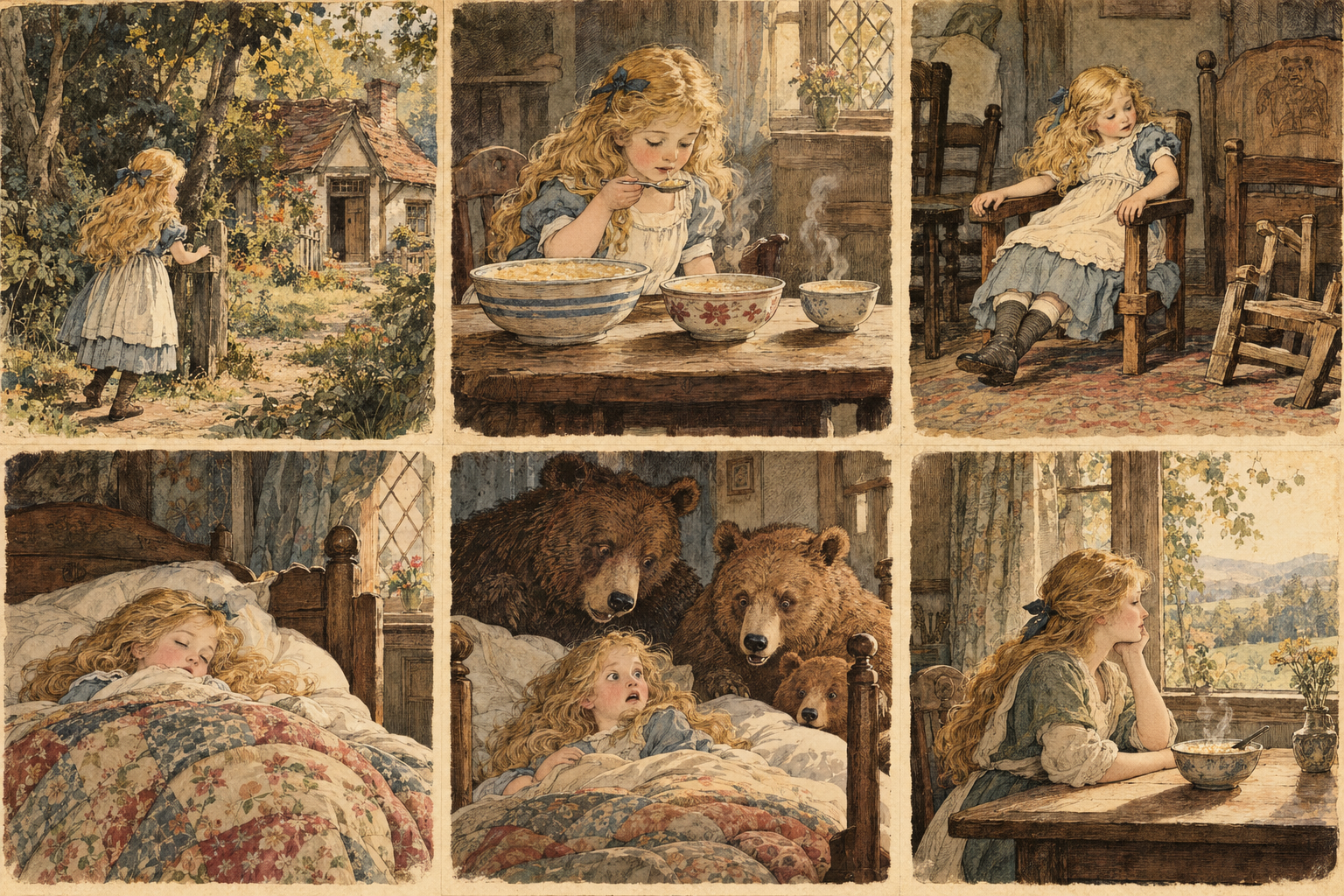
She tastes the first bowl.
Too hot!
She tries the second.
Too cold!
Then the third.
Just right.
There's something rather wonderful about the simplicity of this.
Goldilocks doesn't sit down to analyse the porridge. She doesn't study its temperature or ask someone to explain what the ideal bowl should feel like.
She tastes it.
Her discovery comes through experience rather than intellectual understanding.
We can spend so much of our lives thinking about our experiences rather than actually experiencing them. We analyse how we feel, wonder why we feel that way, compare today with yesterday and anticipate what tomorrow might bring.
Thinking has its place, of course. It helps us understand, plan and make sense of things. But thinking about an experience isn't quite the same as experiencing it.
We can understand relaxation without feeling relaxed. We can know about balance without experiencing balance. We can read about mindfulness without noticing what's happening right now.
Goldilocks, at least initially, is learning directly through her senses.
But here's something else.
What if she hadn't moved on to the second bowl?
What if she'd simply waited?
The first bowl was too hot, but that doesn't mean there was anything wrong with it. It was simply too hot at that moment.
Given a little time, the porridge would have cooled.
And eventually, without Goldilocks needing to do anything else, it might have become just right.
I find that rather interesting.
How often do we encounter something uncomfortable and immediately feel the need to change it?
We become impatient, unsettled or frustrated. Perhaps something isn't happening quickly enough, or we're not feeling the way we think we should.
And so we begin looking for another bowl.
Another solution. Another distraction. Another way of making the experience more comfortable.
Yet sometimes the very thing we're trying to change is already changing.
We just haven't given it time.
Of course, there are situations where action is necessary. We wouldn't want Goldilocks to burn herself on the porridge, nor should we remain in circumstances that are harmful simply because we're practising acceptance.
But not every uncomfortable experience requires an immediate response.
Sometimes we can wait.
Not waiting as another technique to make something happen, but allowing enough space for things to unfold.
The porridge doesn't need Goldilocks to cool it through the power of positive thinking.
It will cool quite naturally.
Perhaps there's something to be learned from that.
When just right becomes something to hold on to
Imagine Goldilocks returning to the bears' house the following morning.
She remembers yesterday's perfect bowl of porridge.
It was delicious. Exactly the right temperature. Everything about it felt wonderful.
But today, the porridge is too hot again.
Perhaps she becomes frustrated.
Yesterday it was perfect. Why can't it be like that today?
And suddenly the difficulty isn't simply that the porridge is too hot.
It's that she wants it to be like yesterday.
This is something we might recognise in our own lives.
We experience a lovely day, a peaceful moment, a sense of connection or a period when everything seems to be flowing beautifully.
And we think, if only life could always be like this.
There's nothing wrong with enjoying these experiences. In fact, being able to appreciate them is something rather wonderful.
But sometimes we begin to depend on them.
When things are just right, we feel happy.
When something changes, our happiness seems to disappear.
And so we begin trying to restore the conditions that made us feel comfortable before.
Perhaps we think more, plan more, worry more or try harder.
Yet life doesn't always cooperate.
Sometimes the porridge is too hot. Sometimes it's too cold. Sometimes there isn't any porridge at all!
And perhaps the deeper question isn't how to arrange our lives so everything is always just right.
It's whether we can discover a sense of ease that doesn't depend entirely on everything being the way we would like it.
This reminds me of something we've been exploring in Qigong.
We begin our practice in stillness, allowing the body to settle, the breath to become natural, and the mind to quieten.
Sometimes a lovely sense of ease arises.
Then we notice it.
Ah, this is wonderful.
And almost immediately, another thought may appear.
How can I keep this feeling?
Perhaps we adjust our posture, monitor our breathing or try to stop thinking.
Without realising it, we have introduced effort into something that arose when we stopped unnecessarily efforting.
We begin holding on to our relaxation.
Or, as we've explored in Unholding, we find ourselves holding on to our unholding.
The very attempt to preserve the experience begins to change it.
The house in the woods
Let's imagine Goldilocks approaching the bears' house for the first time.
She's been walking through the woods, perhaps enjoying the sights and sounds around her, when she comes across a house she hasn't seen before.
There's something inviting about it.
She approaches, opens the door and steps inside.
Now, of course, we know that entering somebody else's home without permission isn't particularly good behaviour. But for a moment, let's stay with the experience of encountering something unfamiliar.
Before Goldilocks can decide whether she likes what she finds, she has to be willing to encounter it.
She doesn't yet know what the porridge will taste like, whether the chairs will be comfortable or what the beds will feel like.
There's an openness to her exploration.
This reminds me of the first exercise of the 18 Lohan Hands, Lifting the Sky.
In our Qigong classes, we've been exploring this exercise through the quality of opening.
At first glance, Lifting the Sky appears to be a simple movement. We raise our hands, open the body and allow them to return.
But there's much more to discover when we stop treating the movement as something we simply need to perform correctly.
We can begin to notice how we move.
Do we tighten unnecessarily as the arms rise?
Do we rush towards the end of the movement?
Are we trying to create a particular feeling, or can we allow ourselves to experience what is happening?
And perhaps most interestingly, do we need to leave our stillness behind in order to move?
We often think of stillness and movement as opposites.
First we are still, then we move, and eventually we return to stillness.
But through practice, we may begin to discover something different.
Movement can arise from stillness without disturbing it.
We don't necessarily need to abandon one experience to enter another.
And this has something to offer us beyond Qigong.
When we encounter something unfamiliar or uncomfortable in everyday life, our first response may be to close down, tighten or move away.
Sometimes that's entirely appropriate.
But sometimes we might discover that we can remain a little more open.
Not forcing ourselves to accept something we don't like, but allowing enough space to recognise what is actually happening.
Perhaps opening begins with the simple willingness to meet the experience before deciding what it should be.
Finding our focus
Goldilocks has entered the house and discovered the porridge.
Her attention is now directed towards something particular.
She's hungry, and there's food in front of her.
She tastes the porridge and discovers what suits her.
This reminds me of Shooting Arrows, the second exercise of the 18 Lohan Hands.
We've been exploring this through the quality of focus.
Focus can sometimes be misunderstood as something requiring great effort. We concentrate hard, narrow our attention and try to exclude everything else.
But in Qigong, we can discover that focus doesn't need to be rigid.
We can remain relaxed, open and attentive.
The body doesn't need to tighten simply because the mind has become clear.
And in everyday life, focus helps us recognise what needs our attention.
Perhaps the porridge really is too hot.
Then the appropriate response might simply be to wait for it to cool.
We don't need to turn that into a problem about ourselves, the porridge or the unfairness of life.
We can recognise what is happening and respond.
But how often do we add something else?
Why is this happening? It shouldn't be like this. Yesterday was better. What if tomorrow is the same?
Before long, we've moved from experiencing something to thinking about our experience of it.
And sometimes, in all that thinking, we lose touch with what is actually happening.
The porridge is still sitting in front of us.
And perhaps, while we've been busy thinking about it, it's already cooled.
A place to sit
Goldilocks finishes her porridge and moves on to the chairs.
One is too large, another isn't comfortable, and eventually she finds one that feels just right.
She sits.
There's something rather lovely about sitting.
The chair supports her. Her body settles into it. For a moment, she doesn't need to go anywhere.
This reminds me of the third exercise of the 18 Lohan Hands, Plucking Stars, which we've been exploring through the quality of integration.
Rather than separating body, breath, energy and mind into different things we need to manage, we begin to experience how they work together.
And perhaps sitting offers a simple everyday example.
When we sit comfortably, we don't need to hold ourselves up through unnecessary effort.
We can allow ourselves to be supported.
Yet how often do we sit without really sitting?
Our body is in the chair, but our mind has already moved on to the next thing.
Perhaps we're thinking about what we need to do later, replaying something that happened earlier or wondering whether we should be doing something more useful.
Or perhaps we're trying so hard to sit correctly that we never quite settle.
Goldilocks discovers the chair through sitting in it.
And for a moment, there is a relationship between her and the chair.
The chair supports her, and she allows herself to be supported.
But then something happens.
The chair breaks.
Even the thing that felt just right doesn't necessarily remain that way.
And sometimes life is like that too.
We find something that works beautifully, and then circumstances change.
Perhaps the answer isn't always to find a stronger chair.
Sometimes we need to recognise that what supported us before may no longer be appropriate.
And sometimes we simply need to stand up.
The art of resetting
Eventually, Goldilocks finds the beds.
One is too hard, another too soft, and finally she discovers one that feels just right.
She lies down and falls asleep.
I like the connection here with Turning Head, the fourth exercise of the 18 Lohan Hands, which we've been exploring through the quality of resetting.
In Qigong, we can become caught in effort without noticing it.
Perhaps we've been concentrating too hard, trying to maintain a particular feeling or carrying tension from one movement into the next.
Then we recognise it.
And we can begin again.
We don't need to criticise ourselves for becoming tense. We don't need to analyse everything that went wrong.
We can simply notice, release what is unnecessary and return.
There's something important about this.
Resetting doesn't mean that the previous experience was wrong.
Nor does it mean we have to erase everything that happened.
It's more like allowing ourselves to put down what we're unnecessarily carrying.
Goldilocks settles into the bed.
For a while, there's nothing more she needs to do.
No more searching.
No more comparing.
No more trying to find something better.
She rests.
And perhaps that's something we can recognise in ourselves.
Sometimes we become so busy trying to improve our experience that we forget we can simply be with it.
We don't always need another technique, another adjustment or another explanation.
Sometimes we need to rest.
But Goldilocks' story doesn't end there.
When the bears come home
Imagine Goldilocks sleeping peacefully.
Everything is just right.
Then suddenly, she wakes to find three bears looking at her.
What a shock!
A moment ago, she was comfortable and relaxed. Now she's startled, frightened and completely out of place.
She hadn't planned for this.
She hadn't imagined that her peaceful experience would end quite like this.
And isn't that sometimes how life arrives?
We may be going about our day, feeling comfortable and secure, when something unexpected happens.
A difficult conversation. An unwelcome piece of news. A sudden change in circumstances. Something that challenges our sense of stability.
The bears have come home.
And suddenly, life isn't just right anymore.
Of course, in the original story, Goldilocks has contributed to the situation herself. She's entered somebody else's home without permission, eaten their food and broken a chair.
That's an important part of the tale too.
Our choices have consequences, and what feels right for us may not be right for somebody else.
But there's also something universal about being caught by surprise.
We can't always anticipate what life will bring.
And no amount of trying to arrange everything perfectly can guarantee that we'll never encounter difficulty.
Perhaps this is where our practice becomes particularly interesting.
Not when everything is peaceful and comfortable, but when something unexpected happens.
Can we recognise that we've become startled?
Can we feel the body tighten, the breath change and the mind begin racing?
And can we allow ourselves a moment to notice what's happening before deciding how to respond?
This doesn't mean that Goldilocks should remain in bed and calmly meditate while three bears stare at her!
Sometimes the appropriate response is to get up and leave.
Being startled isn't a failure of practice.
Fear, surprise and discomfort are part of being human.
Perhaps the practice is not about preventing these experiences, but discovering how we relate to them.
And what happens next.
When the world doesn't revolve around us
There's another interesting aspect to the arrival of the bears.
Until this moment, Goldilocks has been largely concerned with her own experience.
Which porridge suits me?
Which chair is comfortable for me?
Which bed feels just right?
Then the bears arrive.
And suddenly she encounters a reality that doesn't revolve around her preferences.
The house belongs to someone else.
The porridge was prepared for someone else.
The chairs and beds have their own purpose.
Goldilocks has been experiencing the world from her own perspective, but now she's confronted with the fact that other perspectives exist too.
I think there's something important about that.
We all experience life through our own senses, thoughts, feelings and expectations.
And naturally, we tend to interpret things in relation to ourselves.
But the world is much larger than our individual experience of it.
Sometimes what feels right for us may not be right for somebody else.
Sometimes we need to recognise another person's needs, boundaries or circumstances.
And sometimes life presents us with something that simply doesn't fit our expectations.
Perhaps part of becoming more open is recognising that we don't always need the world to conform to our preferences.
We can learn to meet it as it is.
Holding on to our unholding
One of the interesting discoveries in Qigong is how easily we can turn relaxation into another task.
We notice tension, so we try to relax.
Then we notice we're trying too hard to relax.
So we try to stop trying.
And before long, we're making a considerable effort to be effortless.
This is something we've been exploring through Unholding.
We may recognise that we're holding on to a thought, feeling or expectation.
Then we try to let it go.
But what if letting go becomes another thing we're trying to achieve?
What if we're holding on to the idea that we should be letting go?
Maybe the invitation isn't to become better at forcing ourselves to release things.
Perhaps it's to become more aware of the ways we are holding in the first place.
Sometimes that recognition is enough for something to soften naturally.
And sometimes it isn't.
That's okay too.
We don't need to turn every experience into another test of how well we're practising.
Goldilocks doesn't need to become an expert in porridge temperatures.
She can simply notice when something is too hot and allow it to cool.
Life as Practice
This brings us back to something at the heart of our Life as Practice explorations.
What if Qigong isn't simply something we do for 15 minutes in the morning?
What if the qualities we cultivate through practice can accompany us into the rest of our lives?
Opening, focusing, integrating, and resetting are not limited to four physical exercises.
They offer ways of exploring our relationship with everyday experience.
We can open to what is happening rather than immediately resisting it.
We can focus on what needs our attention without becoming lost in unnecessary thinking.
We can integrate our experiences rather than continually dividing life into what we like and what we dislike.
And we can reset when we recognise that we've become caught in tension, expectation or struggle.
Sometimes we discover these qualities while practising Qigong.
Sometimes while sitting in a chair, eating breakfast or walking down the street.
And sometimes when the bears come home.
Life itself becomes our practice.
Not because we have to turn everything into an exercise, but because every experience offers an opportunity to notice how we are relating to what is happening.
And perhaps one of the most interesting discoveries is that we don't necessarily need to leave our stillness behind when life begins moving.
In Tai Chi walking, for example, we explore how one leg supports us while the other becomes free to move.
We transfer our weight, release, step and settle.
Balance isn't something we achieve once and then hold on to.
It's something we continually discover through movement.
If we tried to maintain the perfectly balanced position without allowing anything to change, we'd never take another step.
And perhaps life is similar.
We don't need to freeze everything in place to feel secure.
We can learn to move with change.
Another bowl of porridge
Let's imagine Goldilocks many years later.
Perhaps she's grown a little older and learned a few things along the way.
One morning, she sits down to breakfast.
In front of her is a bowl of porridge.
She takes a spoonful.
Too hot.
For a moment, she remembers that little house in the woods, the three bears and all the excitement of her childhood adventure.
She smiles.
Then she puts down her spoon.
There's no need to search for another bowl.
No need to become frustrated that the porridge isn't ready.
No need to analyse why it isn't quite right.
She simply waits.
Perhaps she looks out of the window, notices the morning light or enjoys a moment of quiet.
The porridge cools.
And when she tastes it again, it's just right.
Not because she struggled to make it so.
Not because she found the perfect technique.
But because she allowed something to unfold in its own time.
And perhaps that's where our familiar childhood story meets the heart of Qigong, Unholding and Life as Practice.
We can enjoy the moments when everything feels just right without needing to hold on to them.
We can encounter difficulty without believing that something has gone wrong with our lives.
We can recognise when action is needed and when we're adding unnecessary struggle.
And sometimes we can discover that what we're waiting for doesn't require us to go anywhere at all.
The porridge may be hot.
The chair may break.
The bears may come home.
And life may not always be the way we would like it.
But perhaps we don't have to lose ourselves in the experience.
We can notice, respond, learn and begin again.
And occasionally, without even trying, we may find ourselves smiling and thinking:
Ah, that's just right.