Archive for June 2026
My Dog the Teacher
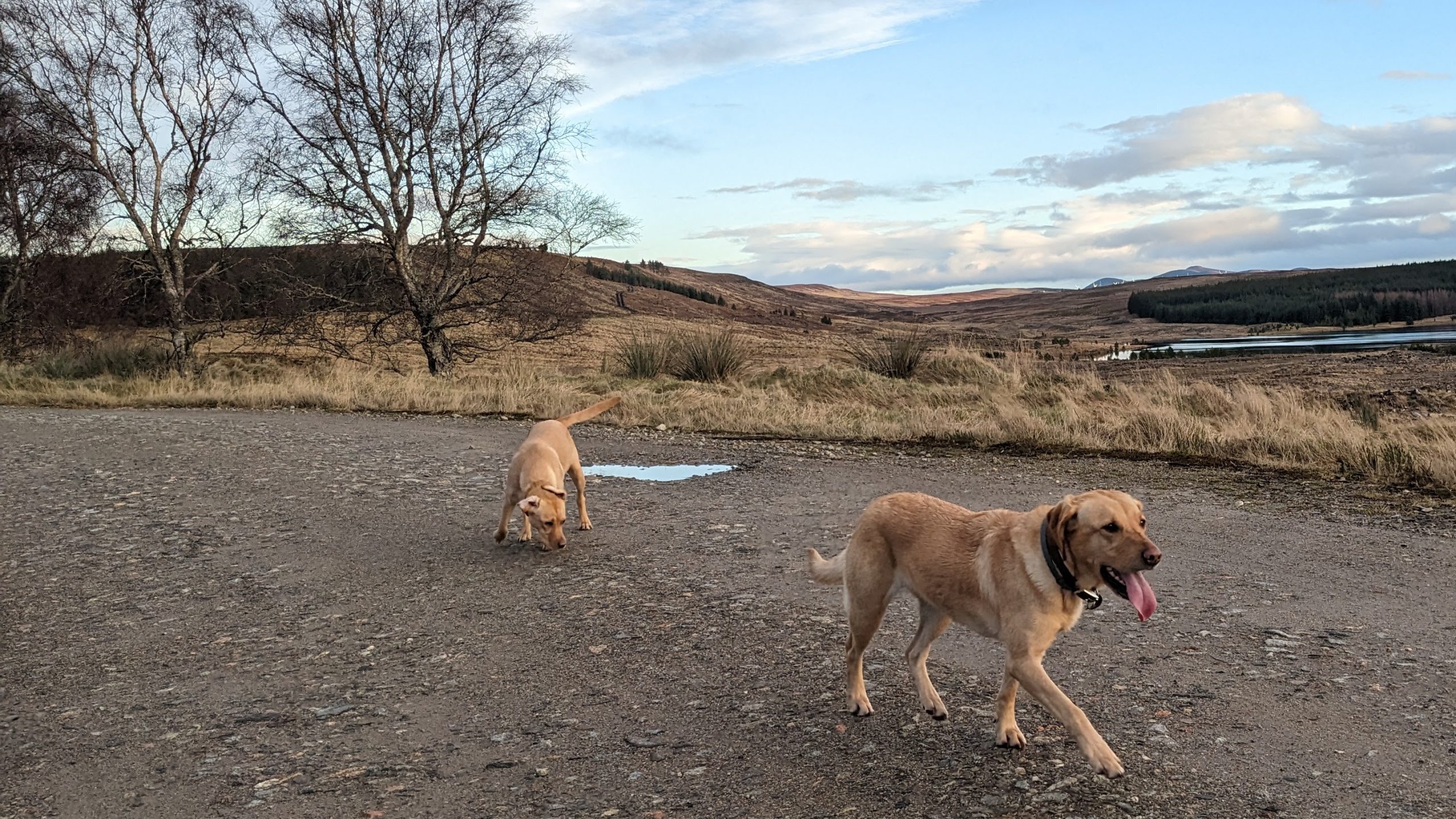
What an ordinary walk revealed about the way we live.
The other morning I was out walking the dogs. Phoebe, the youngest one, and Daisy, our older dog, each had their own way of meeting the morning.
I had work to get to and, although I wasn't rushing, my mind had already begun moving into the day ahead. There were things to do, people to see and, without really noticing it, I had fallen into the rhythm of what came next.
Phoebe stopped every few steps to sniff. Not just a quick sniff before moving on, but a long, unhurried exploration of a scent that seemed to deserve her complete attention.
Daisy would often pause too. She'd wander over to see what Phoebe had found, have a brief sniff herself, then quietly carry on with her walk. Every so often she'd look back, just to make sure we were still there, before happily continuing on her way. She does that.
Phoebe was different. She loved getting completely involved in whatever had captured her attention, as though nothing else in the world existed for those few moments.
At first, I found myself gently encouraging her along. We had a walk to finish, after all.
Then, after one of her many stops, something changed.
Instead of encouraging her to move on, I stopped too.
I found myself wondering what it was she had found that was so fascinating. I couldn't tell you. I don't have her nose. Whatever she was sensing belonged entirely to her world, not mine.
But as I stood there waiting, something else happened.
The pause was long enough to change my rhythm.
I stopped thinking about the day ahead and found myself simply staying with what was happening. I wasn't interested in the scent itself; I found myself enjoying that Phoebe was. She took such delight in exploring it, as though it was the most important thing in the world.
Watching them, I realised neither of them was trying to slow life down. They weren't trying to notice more. They weren't trying to be present.
They were simply being completely where they already were.
As we carried on walking, it struck me that nothing remarkable had actually happened. Phoebe had eventually finished sniffing, Daisy had wandered on as she always does, and the walk simply continued. Yet something had changed, and it stayed with me long after we got home.
It wasn't that I'd suddenly become more relaxed, or discovered something hidden in the grass alongside Phoebe. I still have no idea what had captured her attention so completely. What stayed with me was the realisation that, for those few moments, my own rhythm had changed. I had stopped living in the next part of the day and quietly returned to the part I was already in.
As I thought more about it, I found myself wondering whether we sometimes approach practice in the same way we approach everything else. We try to fit it in. Another thing to remember. Another thing to do. Another item on an already full day.
I wonder how that has worked out for you.
I know I've spent many years trying to fit things in. But that is another story.
The moments that have stayed with me most over the years haven't usually come because I squeezed another practice into my day. They've arrived unexpectedly while walking the dogs, making a cup of tea, sitting quietly after a conversation, or simply noticing something I would normally have hurried past.
A few days later, Dr Damian Kissey, a fellow senior instructor in our Shaolin Wahnam school, reminded me of something our teacher, Grandmaster Wong Kiew Kit, often spoke about. He called it Informal Chi Kung—those ordinary moments when the qualities we cultivate during formal practice begin accompanying us through everyday life. It made me smile because our recent conversations about Mini Moments of Mindfulness seem to be exploring much the same thing.
The invitation isn't to find more time. It's to notice the life that is already unfolding around us. Sometimes all it takes is a young dog becoming completely absorbed in a scent that I couldn't even smell, and a pause that is long enough to change my rhythm.
As I walked home, I realised I hadn't really been teaching the dogs anything that morning.
They had been teaching me.
Not through words or techniques, but simply by being completely themselves.
I still don't know what Phoebe found so fascinating that day.
I don't need to.
The pause was enough.
Why Do Some Conversations Leave Us Feeling So Tired?
What happens when we carry more than the conversation itself?

I was talking with my mum today about stories.
She likes to begin with a story. Before sharing an opinion or making a point, there is often a story that leads into it. As we spoke, she shared something she had noticed about herself.
When she tells a story, she often finds herself justifying herself. Not deliberately. It simply seems to happen.
The story begins as a story, but somewhere along the way, it becomes an explanation. A way of helping other people understand why she thinks what she thinks, or why she did what she did.
As she described it, something felt very familiar.
Not the storytelling itself. I use stories all the time in my teaching and writing. Stories help us connect. They help us see ourselves in each other. They bring ideas to life.
What felt familiar was something underneath the story.
During my counselling training, one of the things I gradually became aware of was how much effort I was putting into conversations. Most people would never have seen it. On the surface, I was simply listening, talking, and connecting. Yet beneath the conversation, something else was often happening.
I was trying to get things right.
Trying to make sure I was understood.
Trying to land well.
Trying not to say the wrong thing.
Trying to connect.
Trying to make sense.
The conversation itself wasn't difficult. It was everything I was carrying alongside it that made it tiring. Listening to my mum, I recognised something similar.
A conversation begins, and then something extra joins it.
The need to explain.
The need to justify.
The need to make sure the other person understands.
The need to make sure they see things from our perspective.
The conversation is no longer just a conversation. It is carrying something else. And carrying something extra takes energy. Most of this happens quietly, beneath the surface. So quietly that we often don't realise how much energy it takes. We meet a friend for coffee. We spend time with family. We attend a meeting. We have a conversation we've had many times before.
Nothing particularly difficult happens.
There is no argument. No conflict. No drama. Yet we arrive home feeling exhausted. The kettle goes on. We sit down. And there it is.
That feeling of being drained.
Not because of what happened. But because of everything we were carrying while it was happening.
The effort of explaining. The effort of monitoring. The effort of making sure we are understood. The effort of making sure we land well. The effort of carrying a version of ourselves that we hope will be accepted.
After reading this, my mum shared something else. She said that when she is explaining herself, she is often worried about using the wrong word. She described herself as being very good at bluffing her way through a conversation, then added, "That's not clever, it's embarrassment."
I suspect many of us have our own version of that. We are not simply carrying the conversation; we are carrying the hope of not getting it wrong.
Not being misunderstood.
Not appearing foolish.
Not being exposed.
And that can be surprisingly heavy.
The strange thing is that this can become so normal that we stop noticing it altogether.
We assume the tiredness comes from being with people. Yet sometimes it isn't people that tire us. Sometimes it is the extra holding we bring into the conversation.
The extra layer.
The extra effort.
The extra weight.
When that begins to soften, conversations can feel very different. There is less to manage.
Less to defend. Less to explain. The conversation is allowed to be a conversation. And we are allowed to be as we are. Perhaps that is why a simple question has stayed with me since speaking with my mum.
What are you carrying into your conversations that this moment isn't asking you to carry?
Not what are you saying. Not even what are you feeling. What are you carrying?
Because sometimes the exhaustion comes from the conversation.
But sometimes it comes from the extra holding we bring into it.
Why Do We Brace Ourselves?
What a simple Qigong exercise revealed about tension, trust, and the habit of holding
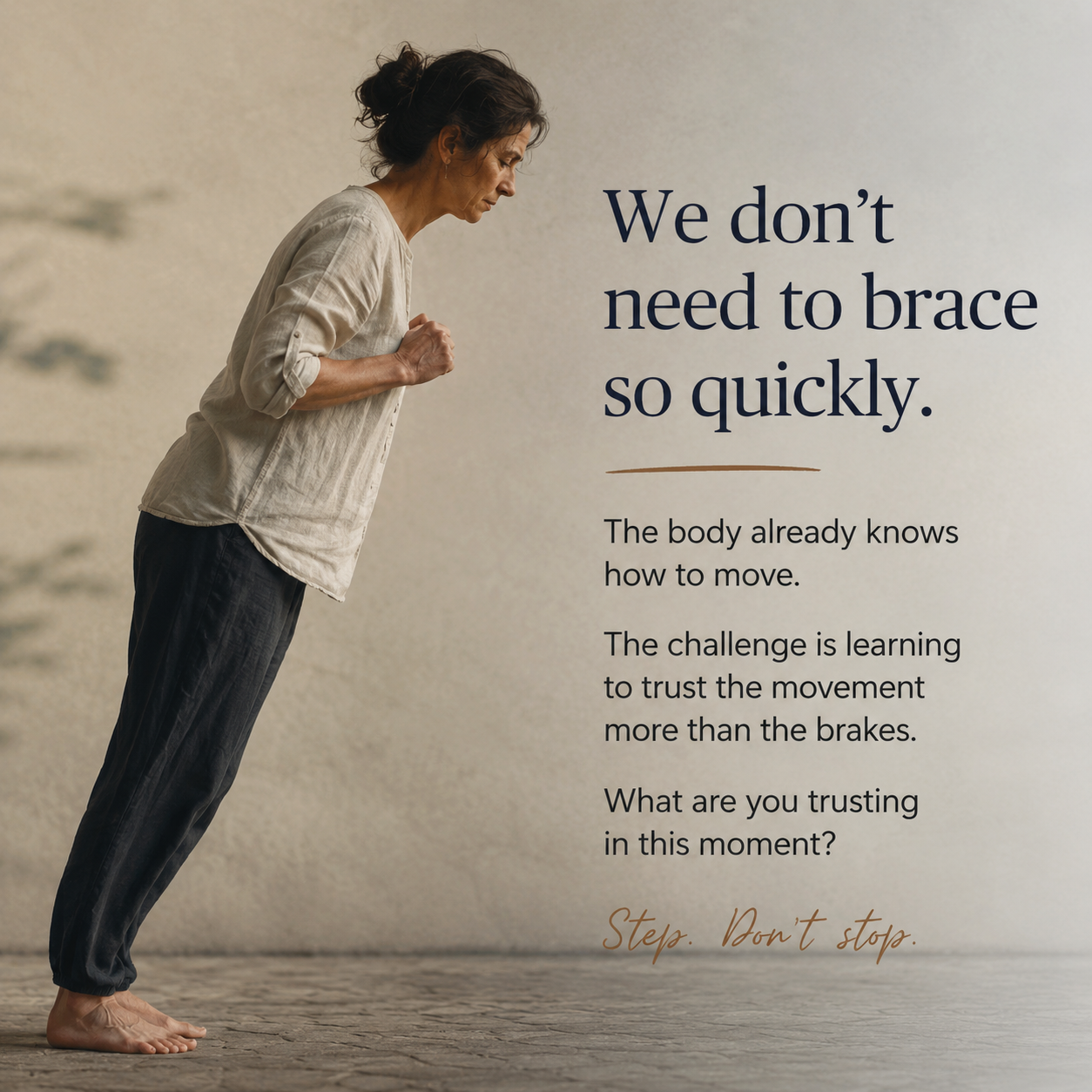
This morning in Qigong class, we were exploring a simple exercise.
Standing upright, we gently leaned forwards onto our toes and backwards onto our heels. As the body moved forwards, there came a point where a step was needed. As it moved backwards, the same thing happened. Simple enough. Yet what interested me wasn't the step itself. It was everything that happened just before it.
For some of the newer students, there was a moment where the body seemed to put the brakes on. Rather than allowing the movement to continue naturally into a step, the shoulders tightened a little, the legs stiffened, and the body began trying to stop itself. Nobody was doing anything wrong. In fact, they were discovering something important.
The body already knew how to step forwards.
The body already knew how to step backwards.
The difficulty wasn't learning the movement.
The difficulty was trusting it.
One student shared something else that was equally interesting. As the exercise continued, they became more aware of tension in their legs and lower back.
For many people, this can be confusing. If the exercise is helping, shouldn't everything feel easier?
Shouldn't the tension disappear?
Yet often the opposite happens at first. Not because the practice is creating tension, but because it is revealing it. The tension was already there. The effort was already there. The body had simply become so accustomed to it that it no longer stood out.
When the body begins to align, and unnecessary effort starts to soften, those habitual patterns often become easier to feel.
What was hidden in plain sight becomes visible. I have seen this happen countless times over the years.
Someone begins meditation and discovers how busy their mind has been.
Someone slows down and realises how tired they are.
Someone starts counselling and becomes aware of feelings they had been carrying for years.
The practice doesn't create the experience.
It reveals what has quietly become normal.
One of the things I have always appreciated about Qigong is how often it reflects everyday life. This morning's exercise was no different. The students weren't really learning how to move forwards or backwards. Most of us mastered that years ago. What they were discovering was the habit of putting the brakes on.
The habit of tightening when tightening wasn't needed.
The habit of trusting the holding more than the movement.
And once you see it in the body, it becomes surprisingly easy to recognise elsewhere.
A difficult conversation approaches, and we tense.
An uncomfortable feeling arises, and we tense.
Something uncertain appears on the horizon, and we tense.
Not because there is anything wrong with us.
Because the holding feels familiar.
Over time, many of us learn to trust it.
We trust the tension more than the relaxation.
We trust the efforting more than the non-efforting.
We trust the holding more than the letting go.
The strange thing is that these habits were usually learned for good reasons. At some point, they helped us. They protected us. They helped us navigate uncertainty and avoid mistakes. They may even have helped us feel accepted and safe. Yet what serves us in one moment can quietly become our response to every moment.
Eventually, we stop noticing it. The holding feels normal. The effort feels necessary. The brakes feel safer than the movement.
What I love about this simple exercise is that it offers another possibility. As the unnecessary tension begins to soften, the body remembers something it already knew.
It knows how to move.
It knows how to find balance.
It knows how to take the next step.
Nothing new needs to be added.
Something unnecessary simply begins to fall away.
Perhaps this is why practices like Qigong can be so revealing. They don't always teach us something new. Sometimes they remind us of something we have forgotten. This morning, the reminder was simple. The body already knew how to step.
The challenge was learning to trust the movement more than the brakes.
I suspect that is a lesson many of us continue to meet, both in practice and in life.
Why Does Everything Feel So Heavy?

Sometimes the Heaviest Part Isn't the Experience
Sometimes the heaviest part isn't the experience.
It's everything wrapped around it.
Imagine carrying a few shopping bags from the car to the house.
The bags themselves are heavy enough.
Your fingers begin to ache. Your shoulders tighten. You start shifting the weight from one hand to the other.
Now imagine someone quietly adding another bag. Then another. Then another.
At some point, it becomes difficult to tell what is actually making the load so heavy.
Life can be a bit like that.
A feeling arises.
Perhaps sadness.
Perhaps anxiety.
Perhaps disappointment.
Perhaps uncertainty.
The feeling itself can be difficult enough to carry.
Yet it rarely arrives alone.
The story about the feeling often comes too.
"Why am I feeling like this?"
"What does this mean?"
"What's wrong with me?"
Then comes the worry.
"How long will this last?"
"What if it gets worse?"
"What if I never get past this?"
Then comes the struggle.
The attempt to push it away.
To distract ourselves.
To think our way out of it.
To make it disappear.
Before long, what started as one experience can feel like a whole collection of burdens being carried at the same time.
And because they arrive together, they can feel like one thing.
One heavy thing.
It is easy to assume that all of the weight belongs to the original feeling.
But does it?
A question that has been quietly accompanying me recently is this:
What belongs to the experience?
And what has gathered around it?
Not as an intellectual exercise.
Not as something to analyse.
Simply as something to become interested in.
Because there can be a difference between sadness and the story about sadness.
A difference between anxiety and the worry about anxiety.
A difference between grief and the struggle against grief.
When everything becomes wrapped together, the weight grows.
And yet not all of that weight belongs to the original experience.
This isn't an invitation to get rid of anything.
Some feelings need to be felt.
Some losses need to be grieved.
Some conversations need to be had.
Some situations genuinely require support, action, or intervention.
The question is not whether the feeling should be there.
The question is whether we are carrying more than the feeling itself.
Life has a remarkable capacity to move.
A cut heals.
A seed grows.
The body finds sleep.
Grief slowly reshapes itself around loss.
Understanding emerges when we stop forcing answers.
Often, life is already moving in ways we cannot yet see.
What sometimes gets in the way is the extra weight.
The stories.
The worries.
The resistance.
The layers wrapped around the original experience.
Sometimes the heaviest part isn't the experience.
It's everything wrapped around it.
And sometimes something begins to soften when we gently ask:
What belongs to the feeling?
And what has been added to it?
Healing is Not Always the Cure

This morning in Qigong class, we explored something very simple.
We began, as we often do, by noticing what was already here.
Not trying to relax.
Not trying to create a special state.
Not trying to improve anything.
Just noticing.
Where does the body feel open?
Where does it feel held?
Where is there flow?
Where is there congestion?
As we moved through Lifting the Sky, Carrying the Moon, and Pushing Mountains, something became increasingly apparent.
The movements themselves were not really doing the work.
Or at least, not in the way we often imagine.
What seemed to matter most was becoming aware of what was already happening.
One person noticed how a small adjustment in opening the palms seemed to change the whole feeling of the exercise.
Another noticed a greater sense of flow.
Others noticed places that felt tight or places that seemed to soften without being asked to.
Nobody was trying to fix anything.
Nobody was trying to get rid of anything.
The practice simply created the conditions for something to happen.
And that got me thinking.
Many of us approach wellbeing as though we need to add something.
A new technique.
A new insight.
A new routine.
A new solution.
Sometimes that is exactly what is needed.
But this morning reminded me that many of the most meaningful shifts in my own life have happened in a different way.
Not because something was added.
But because something unnecessary stopped getting in the way.
A tension I hadn't noticed.
An effort I didn't need to make.
A habit of rushing.
A need to control the outcome.
A story that had quietly taken up residence and started running the show.
As these things soften, something else often appears.
Not something new.
Something that was already there.
The body knows how to breathe.
The heart knows how to soften.
The mind knows how to settle.
Life already knows how to move.
Grandmaster Wong Kiew Kit often taught Qigong as a way of overcoming illness and restoring health. Many people first came to the arts because they wanted relief from suffering.
Yet alongside this, he often spoke about living a rewarding life, here and now.
The more I practise, the more important those three words seem.
Here and now.
Not when everything is fixed.
Not when all our problems disappear.
Not when life finally matches our plans.
Here.
Now.
Perhaps this is one of the gifts of practice.
Not that it cures every difficulty.
But that it helps us recognise the conditions that allow life to flourish.
A tree does not grow because someone pulls on its branches.
It grows because the conditions support growth.
A river does not need to be taught how to flow.
It simply needs a clear path.
Maybe we are not so different.
This morning left me wondering whether healing is not always the cure.
Whether sometimes healing begins when we recognise what is already present and gently remove what unnecessarily interferes with it.
The Habit of Holding
The Habit of Holding
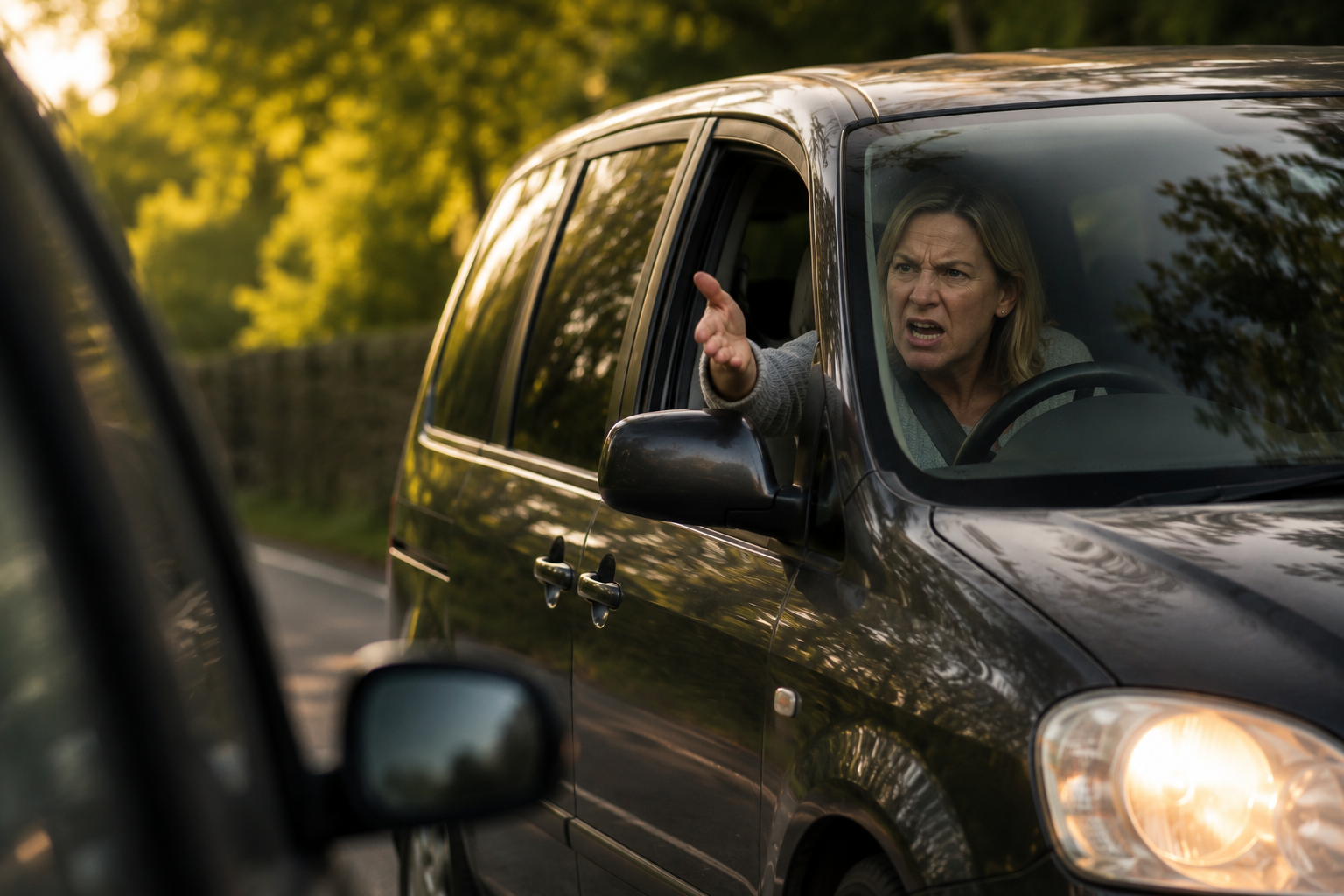
My sister recently left me a message about something that had happened while she was driving.
She had pulled over to let another driver pass. Instead of a wave or a thank you, the other driver stopped, wound down the window and made a rude comment before driving away.
What stayed with her was not so much the interaction itself. It was what happened within her.
Almost immediately, there was a tightening.
Perhaps you know that feeling.
A comment from somebody at work.
An unexpected email.
A message that goes unanswered.
A look across a room.
A driver sounding their horn.
For a brief moment something shifts. The body responds before we have had time to think much about it. The stomach tightens. The shoulders lift a little. The breath changes. The jaw firms. Something prepares.
Most of us have experienced this many times. Yet because it happens so quickly, we rarely stop to notice it.
Over time these small moments can become part of everyday life. We become accustomed to them. They seem ordinary. We may not even think of them as tension. They simply feel like the way things are.
Nearly one hundred years ago, a physician named Edmund Jacobson became interested in this very thing. He spent years studying muscular tension and discovered that people who believed they were resting were often still making effort. The body remained active long after the need for action had passed.
What interested him was not relaxation. It was awareness.
How much effort are we making without realising it?
It is an interesting question.
Not because there is something wrong with us.
Not because we need fixing.
But because many of us spend our lives carrying small amounts of effort that have become so familiar we no longer recognise them.
The shoulders that never quite settle.
The jaw that remains slightly engaged.
The stomach that continues preparing.
The eyes that keep searching.
The body that remains ready.
Ready for what is not always clear.
As I have been exploring Jacobson's work, I find myself less interested in relaxation and more interested in noticing. What happens when we begin to recognise these moments? What happens when we notice the tightening as it appears?
Not with the intention of getting rid of it.
Not with the intention of becoming calm.
Simply noticing.
Perhaps the invitation is not to ask, "How do I relax?"
Perhaps it begins with a different question:
What am I doing right now that no longer needs to be done?
There may not be an answer straight away.
There may only be a small moment of recognition.
A shoulder softening.
A breath completing itself.
A jaw no longer working quite so hard.
Not because we made it happen.
Simply because it was finally noticed.